
Project
Brew2Bio
High-sustainability liquid biofuel production and high-value products from urban solid waste in the food service sector
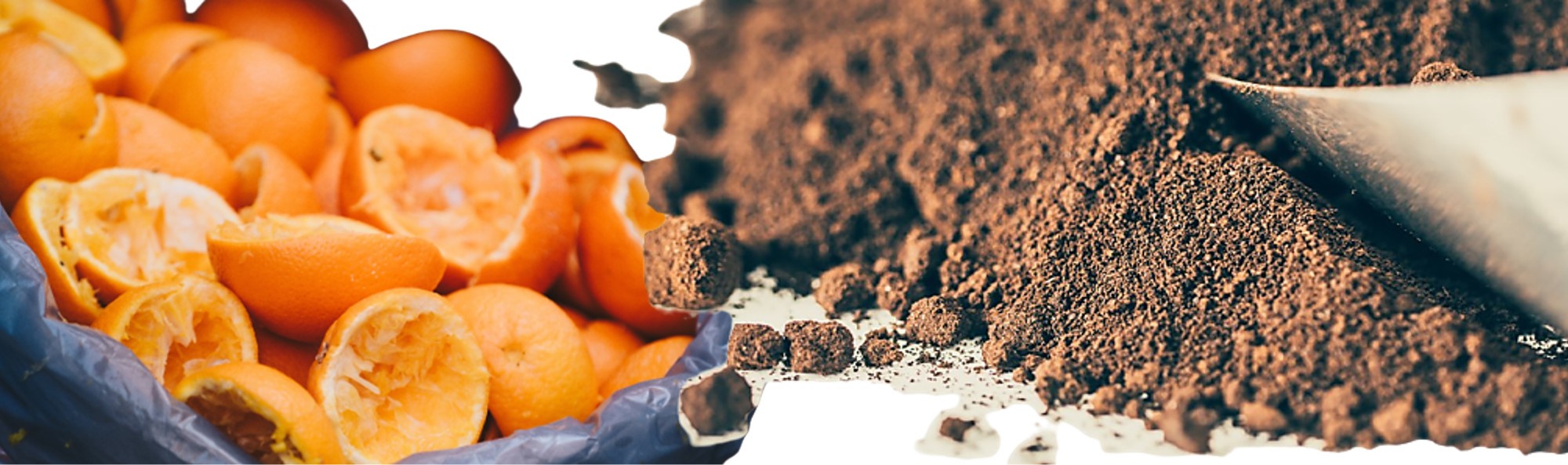
Brew2Bio focuses on exploiting the organic fraction of municipal solid waste (e.g., coffee grounds and orange peels) to produce advanced biofuels (e.g., green diesel) and bio-based products suitable for adhesives used in composite wood products. The technologies under development can utilize various bio-based fractions of urban solid waste, thereby enabling the future implementation of sustainable processes. Brew2Bio employs bio-refinery principles to produce multiple value-added products, supporting the economic viability of biofuel production. By comparing thermochemical processes, bioprocesses, or combinations, the most sustainable method for producing green diesel is identified.
Objectives
- Develop an innovative bio-refinery for sustainable use of coffee waste and orange peels
- Optimize microbial lipid production using oleaginous yeasts fed by free sugars and cellulose/hemicellulose hydrolysates
- Optimize biofuel production
- Assess blends of plant-based and microbial oils for manufacturing bio-lubricants
- Investigate d-limonene in refining microbial oils and producing bio-lubricants
- Evaluate bioactive extracts as additives for bio-lubricant property enhancement
- Exploit protein/pectin fractions for making adhesives

Brew2Bio
High-sustainability liquid biofuel production and high-value products from urban solid waste in the food service sector
Brew2Bio focuses on exploiting the organic fraction of municipal solid waste (e.g., coffee grounds and orange peels) to produce advanced biofuels (e.g., green diesel) and bio-based products suitable for adhesives used in composite wood products. The technologies under development can utilize various bio-based fractions of urban solid waste, thereby enabling the future implementation of sustainable processes. Brew2Bio employs bio-refinery principles to produce multiple value-added products, supporting the economic viability of biofuel production. By comparing thermochemical processes, bioprocesses, or combinations, the most sustainable method for producing green diesel is identified.
Objectives
- Develop an innovative bio-refinery for sustainable use of coffee waste and orange peels
- Optimize microbial lipid production using oleaginous yeasts fed by free sugars and cellulose/hemicellulose hydrolysates
- Optimize biofuel production
- Assess blends of plant-based and microbial oils for manufacturing bio-lubricants
- Investigate d-limonene in refining microbial oils and producing bio-lubricants
- Evaluate bioactive extracts as additives for bio-lubricant property enhancement
- Exploit protein/pectin fractions for making adhesives